Episode Transcript
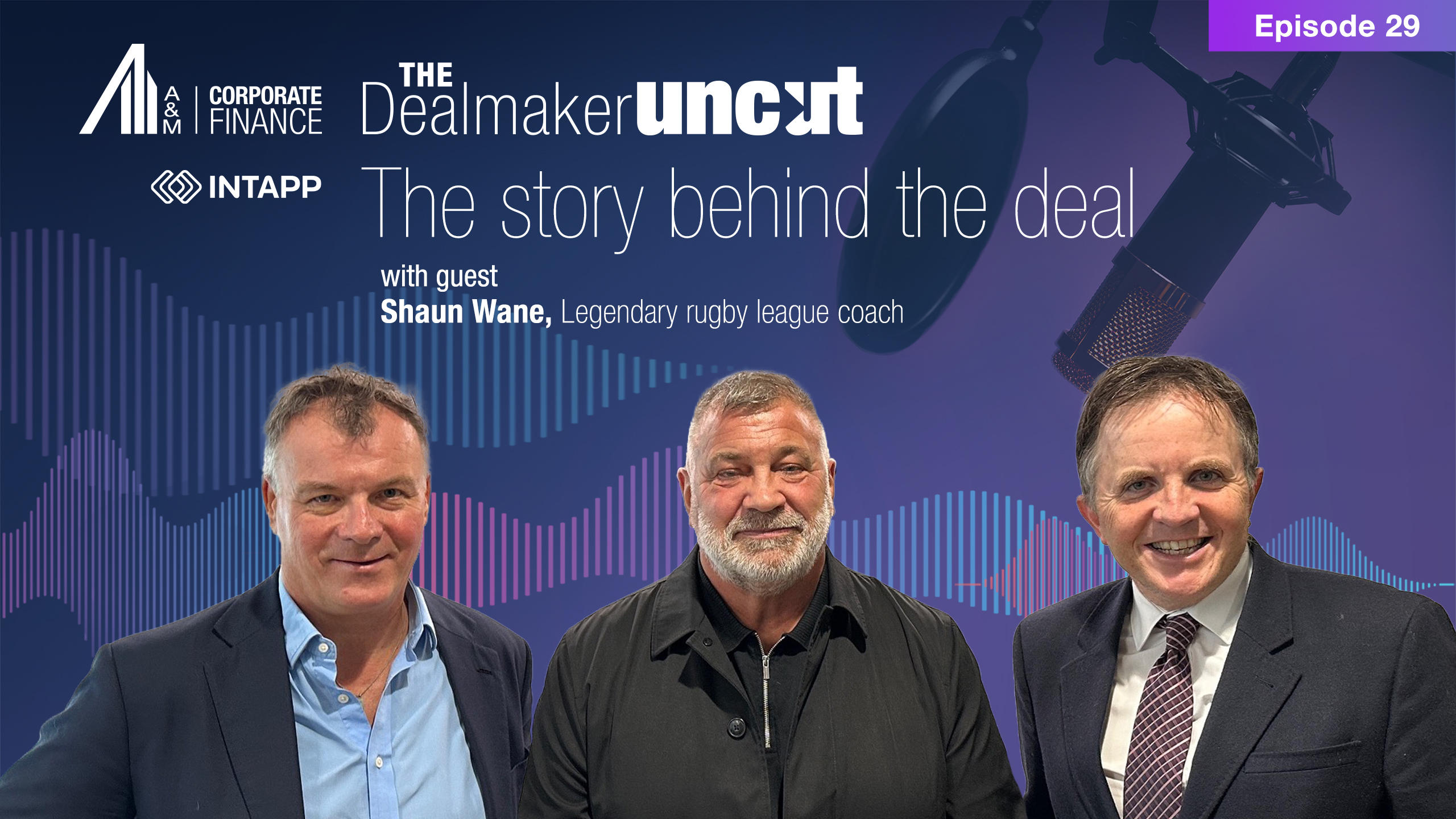
[00:00:07] Speaker A: Welcome everyone to the latest episode of the Dealmaker Uncut podcast, powered by Alvarez and Marcel. My name is Chris McGuire and I'm the executive editor of Business Cloud. And as always, I'm joined by the multiple award winning dealmaker himself, Jonathan Boyers. Jonathan's been involved in deals totaling billions of pounds during his long and illustrious career and he's a managing director and head of Alvarez and Marcel's corporate finance practice in the uk. Welcome, Jonathan.
[00:00:31] Speaker B: Thanks, Chris. I'm really excited about this session
[00:00:35] Speaker A: and I've never known you so excited. This is the podcast that gets you inside the deal. But today there's a twist with our guest and we'll be looking at the lessons we can take from elite level sport and how we can apply them into the world of deal making and business more generally. Jonathan, you've been like a kid at Christmas.
Who are we speaking to today?
[00:00:54] Speaker B: Well, Chris, regular watchers of the show will know that I'm from Wigan and I'm a proud Wigan Rugby League supporter.
And today we're going to be talking to a legend of the game from Wigan. So, Shaun Wayne played 149 matches for Wigan as a player and he's probably even better known as a coach. So in Wigan, Sean is a legend.
He's a three time Grand Final winner as a coach. He's also won the Challenge cup, he's won the World cup champion game, and he's pretty much done everything that there is to do in the game. He's also been the England Rugby League coach and his win rate as the England coach was higher than anybody's ever achieved.
So these days. So I've been working with Sean recently as a business consultant and as a coach and an inspirational speaker.
So Sean's been working with our team and with some of our clients. So I'm really delighted that he's agreed to join us today. So welcome, Shaun.
[00:01:58] Speaker C: Thanks so much, Jonathan. Thank you, Chris.
[00:02:00] Speaker A: Listen, Sean, if Jonathan had his way, he'd talk to you non stop about rugby league questions. And as a Southerner, they go right over my head. But the bulk of the interview will focus on what business and deal making can learn from elite level sport. And there are a lot of lessons as well.
I think it'd be helpful to provide a bit of context to your career as a player by talking about your upbringing as well. I was going to ask one question, if I may, is that I heard you speak on another podcast. You grew up in a tough estate in Wigan and you and your brother regularly found yourself on the end of your father's anger.
And it really affected me when I listened to it. It moved me deeply. How bad did it get and how did that experience shape your career, both as a player, both as a coach and as a father?
[00:02:43] Speaker C: Yeah, that's a. It's a good question. I. There was six kids. There was five boys and a girl.
Everybody's. I've lost everybody, Mum and dad, all my brothers, me and my sister still alive.
But the way my dad dealt with me and my brother Tony was brutal. It was nasty. I've never really told anybody the detail because it is very, very sad. But what it did for me, Chris, it made me into a really good dad.
A really good dad. I have two daughters. One what I work with full time, Bethan and a younger daughter, Megan. And when they were born, that changed my attitude. You know, I was.
I felt like I was a good person. I couldn't wait to leave home. I left home when I was 15. I could not wait. I didn't like being at home. I spent all my time away sleeping rough and being out up to no good.
But the lessons I learned from it was I didn't want Marcus to feel the same way I did about my dad, which was just fear.
Just pure fear. I have no good memories, no Christmas days, not nothing.
But I don't. I don't. I've never ever told the real truth because it's just not a good story.
But what the benefits was that it made me. It made me a very, very good dad. One thing, what I do, what I did remember was 2016, 17, I was head coach at Wigan and my brother Tony got cancer. And I ended up spending four months with him every day in his bed. He couldn't get out of bed.
And we used to talk about our childhood. And he'd remembered every single detail of every day. And he kept bringing stories up, bad stories which had.
Couldn't remember.
So I ended up going home at night thinking in. In a terrible mood because it reminded me these stories. So I ended up saying to him, tony, I don't want to talk about it anymore. Don't talk or don't reminisce of what happened when we were kids. I just didn't want to know. I didn't want to know it because that's in the past. I've not had no control about that. No control about what mum dad did and where I lived and how they treated me.
What I have in my control of what I do now and how I treat my kids and What I do in the next hour, in the next day and that's what I prefer concentrating on.
[00:05:10] Speaker A: But I think it actually made you an empathetic coach as well because you always had a, you always looked after the interest of your players, not just in terms of on the pitch, but their life off it as well. I'm going to ask you one other question if I may because before I hand over to Jonathan, I spoke to you off air and when you stopped your career as a rugby league player and the idea that you'd made millions and you could retire, that's for the birds. It wasn't like that. It's still not like that now really in rugby league.
And you, you got a full time job. You were working at Tarmac, I think a construction company. You're getting up at whatever time in the morning and then you started cutting your teeth as a coach at Wigan, with the academy, I think and you were literally, I think out of the house for 20 hours a day and then in those four hours that you had, I think you used to cut videos before data analysts were even a thing.
So it seems to me that, you know, you're a straight talking wigger ner, but you're always ahead of the curve in terms of technology and in terms of how you could get an extra advantage in your career, in your life. Would that be fair?
[00:06:10] Speaker C: Absolutely, yeah. Yeah, it would.
I just wanted my players to be better prepared than anybody else. I wanted my staff to have my physios to be the best physios with the latest technology. And I started coaching when I was 23, started coaching the schools around Wigan and then when I finished playing then I went into it in a serious manner coaching the junior. Like you said, I was working for a big construction company term at one of them.
I learned how to drive wagons because I thought I'd always be able to pay my mortgage if I drove wagons. So I paid to pass my testers as in every goods driver and, and I loved it.
I would have paid Tarmac money to what to do that job. I loved it that much.
I just enjoyed the, the pressure of getting jobs. We did the Hilton Deansgate, we did that job them them to other jobs and I loved it. I love the challenge of and I wanted to sell when we I worked part as a team, I was a key account manager but I wanted to sell more concrete than anybody else. I wanted to make more profit on per cube of concrete and very, very competitive.
But as in when I was coaching the juniors, the first team Then hardly did any looking at videos, no reviews or previews of games.
But I would do that in my dinner. I sat in Manchester and all these streets were near because I'd sit there with my little laptop and clip training and just try to copy what they're doing in Australia at the time.
And that made me different. I didn't have an analyst, so I did everything. I didn't have a team manager, so I washed my own kit, the place kit. I tweeted that myself and did it myself and paid for it myself. And I won't get paid anything.
I just wanted my team to be super, super successful.
[00:08:07] Speaker B: So, Sean, a big part of my job at Alvarez and Marcel has been to build a corporate finance team.
We've hired 170 people in the last three years.
The business is maturing quite nicely now, but one of the challenges has been to make sure that we're creating a strong culture that is a winning culture.
A number of the things we've had conversations over the last year or so that have really inspired quite a lot of what I've been doing when I've been thinking about our business.
Would you mind just talking. There's a number of key principles that you've had non negotiables when it comes to building a team and keeping a team together. Would you mind just talking about your attitude to those and a few of those?
[00:08:56] Speaker C: Yeah.
I've got to know you, Jonathan, really well. I've known about you for decades from your previous employee and I've been into Alvarez and Marcel many times over the last year and I've been super impressed with some of the things you, you, you do here and the, the detail, which I'm obsessed about the detail.
So that's why we get on. I've got the utmost respect for what you do here. If, if I didn't, I just won't say anything. So I, I have learned a lot from being in, in your company as in my coaching methods and non negotiables. I am very, very open.
The thought of having a meeting with my staff and my players and it, it's just me speaking mortifiers Metro.
I, I have a strict meetings. If you come into an England meeting when I was coaching England, you think it was a group of friends having a chat about how to win a game. It's that open. And so making sure that everybody has an opinion. I want you to speak, tell me what you think. Whether you agree with me or not. I need to know was one of the things turn up on time Punctuality. I've always had a saying that on times late. So if I have a meeting at six in the morning with the players and the player comes at five to six then there's a chance he won't get in the meeting. So I want my players to R5, 25 past five and I want them rolling the backs, preparing, getting ready for the meeting. I didn't have meetings for the sake of it. There was a purpose and everybody knew what we wanted to get out of that meeting.
So being punctual was really, really important to me. Having the right kit on starting sessions out on the field. If we're going to start at 10:25 on the field, I want the players out very early, ready to go at 10:25. And I was here today really, really early and having integrity. Do what you say you're going to do.
This is, we're doing this as friends today at 9 o'. Clock. It's not my job but we're doing it because we agreed it. I give my, my word that I'll be here today. So I'm, I'm here and earn our fairly. I know where your office is but I wanted to make sure I was here if you have your cameras. I was outside very early this morning knowing that I'm going to be here on time and having integrity and doing what you say you're going to do is really, really important. And what I see now I'm going off, off guiltry a little bit but I have conversation with, with players and, and staff and it's very, very easy for people to say I'm just running late and, and can I see you tomorrow instead? And, and, and I just think to myself how much have you prepared, you know, for this meeting and planned your day to be here on time? And the world would be a lot easier if people just stuck to what they said they're going to do and, and, and just show integrity to everything. So having integrity. I didn't like moving meetings. We have a meeting at half ten and my physio would say we're running a little bit late, can we make it? I really, really, really resisted that. I didn't like it.
I have given in and moved meetings but I didn't like it. I definitely wouldn't change training so I really, really pushed it out to staff and players about the importance of, of having integrity. Do what you say you're going to do. Respect people. Don't. Do not speak badly to people. I don't. I have never ever abused A player verbally abused anybody. They don't verbally abuse me.
We tell each other straight but we don't abuse each other. So that respect everyone and everything was another non negotiable so and then after that over win games I'm coaching players. Jonathan as you know of the caliber of Tommy Luluwai and Sean Laughlin plays a lot better than me. So why would, why would I not listen to them? You know I want their opinion and I, I have gone into meetings where we're planning to beat St. Helens and this is the game plan and, and I've asked for their opinion and they've disagreed with something I've said and we've actually changed the plan. You know what really encourages me when they start saying no I don't think that's going to work. I think this will work, we'll change it. And what that tells me is that they're absolutely committed.
They're really putting everything on the line to say they're going to win this game. So I loved it. So them sort of things. Yeah, I've gone all over the place. That's answer your question.
[00:13:42] Speaker B: No, it's fascinating.
One of the things that really struck me is the when we've been talking about things was your attitude to giving feedback to players and obviously there's a direct relationship into business and giving feedback to your teams. Could you just talk about your philosophy in that regard?
[00:14:05] Speaker C: Yeah. And you know I have done hundreds and hundreds of talks for organizations and I think this is probably the biggest challenge for any organization to build that spirit into your business. Were I ever saying tell everybody everything? All the time. And when I was a player I got moved on from Wigan and, and when I got asked why I would be moved on going to Leeds which ended up being a really good move for me. But when I got told that I was leaving, the coach didn't think I was. There was a few things in my game which he didn't like but he hadn't told me. The first thing I knew about it was I was leaving. So that really, really struck a card with me. Just like what struck a card with me was when, when Bethan was born and I thought I'm she, I'm not going to treat it, I have a feeling the way I felt about my dad. So I learned from that. And then when this happened, when I was a player being moved on, when I didn't want to move on and not being told straight what, what I needed to change really hit me. I didn't know I was going to coach. Then I was only. I was only 20, late 20s, and.
But I thought, if ever I'm a coach, there's no player going to be unsure how I feel about him. No staff member is going to be unsure.
And so I find it very, very easy. And if you. If you said to me, jonathan, the way I look at it is if I work for Alvarez and Marcel and.
And you said to me, sean, stop coming late, fix your punctuality, be on time, or else we're going to move you on, then I've got a chance to fix it. Then I can either be more punctual, keep my job, keep paying my mortgage, or else I've gone and you've given the chance. But I never got that chance. So it ingrained in my mind that whenever I'm with my physio, my staff, my assistant coaches, my players, whoever I'm involved with, I'm going to tell them straight, I'm happy with you. Keep on doing it. This is how we can make improvements to the good things you're doing, or else I'm not happy. Jonathan, you need to get better at this. This is how we're going to do it. I'll show you clip after clip of whether it's that, whether it's training, whether you're not lifting weights heavy enough, whether you're not looking after your own life.
You. You will get told. You will get told numerous, numerous times. So there was no, no player, no staff member, shocked if I move them on or if. If I increase salary and increase the contract length.
Nobody was shocked because people talk about quarterly reviews and I play just get early reviews. You know, I walk past gym and see people lifting and bleeding and getting stronger, and I would praise them and tell them, I like it, keep doing it.
They get only feedback. You know, I was very much into feedback. Whether it's positive or negative, people need to know where they stand. So when it comes to the end of the road, and I don't say this in a glib way, and I'm not very proud of this, but I've let players go and, and they've got rid of themselves. So I'll show players for weeks and weeks, there's certain things in your game you're not doing. I need you to do it to help us to win. And it turns up, they can't. They can't physically do what I need them to do. They're not doing it. They either don't believe it or they can't do it.
And then I would say to them, if you were me, what would you do? And they said, well, I'd let myself go. I said, well, you're going to go, I've got your club, but you're going to leave. And we've ended up staying friends because they knew.
The decision I come to about them leaving was for me, it weren't nothing behind the scenes, it was honest and I've given honest feedback.
So having that honesty in you, and I'm not, not saying people are dishonest, I'm not saying that, but people see it as confrontational and it's not.
You want a business, for instance, if you're a bank about making profit and the cleaner helps you make profit, the, the chef, the sales people, the. Everybody's going to help you to make profit and everybody's going in the same direction. So them conversations easy to have, you know, I'm trying to make your job easier, you're trying to make my job easier because we're all going in the same direction and people need to know where you're going and why you're going there and what role you play.
[00:18:37] Speaker B: I think this thing about giving feedback is a lot of people find it really difficult to give direct feedback and I think it is because it involves confrontation.
So it might be a gentle confrontation, but it means stepping into an uncomfortable conversation with a view to trying to improve the business or improve somebody's performance.
And people like to be given positive feedback and obviously there's lots of, you probably should give more positive feedback than constructive feedback. But it just strikes me that that is missing in a lot of businesses. We try to do it and some people aren't self aware enough. Even you give them feedback and if you're too subtle about it, they don't hear it. And you have to be really direct or else they don't get
[00:19:25] Speaker C: it as long as it's done in the right way. When I worked at Tarmac, I was in charge of a certain department, but I have lots of lines, managers and there was a person working there, what went quiet on me and, and I could tell for a few weeks he weren't speaking, engaging with me. So in the end I went and said, what is, what's wrong? We've gone from best friends and best work colleagues and all of a sudden you've gone quiet. And something I'd said in the meeting, not rude, not direct, he didn't like it and I just said to him, if you'd have told me on the day when this all started, I'D have apologized and we move on and we all crack on and we're all trying to get. We're trying to get the same thing. We're all in for the same reason. So I found it.
I found it very easy. What I wouldn't like if I worked at A. M is you going quiet on me and me asking, why are you going quiet? I want you telling me straight away, stop coming late, you're pissing me off. Don't keep coming late and that, and it will be miles better. Every organisation, bar none, would benefit from not. Not rude, just honest feedback. What comes from the right place.
[00:20:39] Speaker B: There's a few nuggets of things in the various conversations we've had that's probably the most significant that's affected how I view what we do in our business.
[00:20:48] Speaker C: As it has. It happened since we've spoken where you've done it and you've felt better about this worked.
[00:20:56] Speaker B: Yeah. I mean, you can never be perfect at these things, but I think it is something. We work hard in our business to get people to give feedback and I try to, but like I say, it's just hard and people are more. If you ask for feedback, if you're doing an appraisal round and you ask for written feedback from people, you say, right, we want a lot of feedback for your team. When people write it down, always end up with glowing feedback. It's almost like they're the best person that you've ever worked with.
And then when you actually ask them about them, say, well, actually, they do this wrong and they do that wrong, but people find it hard to articulate it directly to the person.
[00:21:38] Speaker C: Yeah, this sounds cocky. I've never. I find it very, very easy. I find it hard not seeing it.
[00:21:46] Speaker B: You can step into conflict.
[00:21:48] Speaker C: Yeah, yeah.
[00:21:49] Speaker A: But they say a couple of things. One, incidentally, that I'm really glad that you said, because I've picked up on it as well. Jonathan hasn't been pumping enough irons.
I mean, I. I'm cut from the same cloth as you in a sense that I am direct and I am honest and I'm. I come from a good place as well, but not everyone and I, you know, some younger people maybe aren't receptive to it. You hear about it with football managers, you know, like in Alex Ferguson's day, he was super direct with his players.
But then when those players are multimillionaires, they don't react the same way. And not everyone can give that sort of advice and it's received the same way. So sometimes you've got to. And I wonder whether or not in the professional services world, how direct can you be?
[00:22:33] Speaker B: So that brings another question, doesn't it? So if you've got an absolute superstar that you can hire, bring him into the team and he's brilliant at what he does, but not got the right culture, you know, what do you do? What's the priority?
[00:22:50] Speaker C: Very, very simple. Very, very simple to me, no matter how good they are, they have to move on.
I've told you about my key principles, non negotiables about respecting people and I've been through this and with this particular player we was better. We have more chance of winning things, games with him in our team.
But he couldn't stick with key simple principles about respecting staff and, and speaking to people the right way. And, and, and, and I moved him on and the owner of our business didn't want to move him on. But I just knew, and I knew that we could win something this year, but we won't win something for five, six, seven years. I wanted to win something for decades at Wigan and that was my thought when I was a coach there and I got rid of this player and then we went on to be in finals for the next four or five years.
[00:23:50] Speaker B: So it brings another thing into question around when you're looking for a player, what are you looking for? How do you decide you're going to hire somebody? Well, I think I'm hiring somebody. How do you decide they're going to fit in with our team and they're not?
[00:24:07] Speaker C: Yeah. So this is something I've been obsessed with since my 20s because I've coached so many hundreds and probably thousands of juniors. Wigan. And I remember Sean o', Laughlin, he's the best player in the world, the best 13 in the world.
And I remember him coming through as a kid and I remember other players, 14, 15, 16 better than him, better footballer, better players.
But he made it to be the captain, the best captain, the best player we've ever had. So he got me thinking what, what, what is the ingredient in him? What's made him a fantastic professional and not them other players. And, and there was lots of instances like that. So I started doing a bit of a study myself because I'm a little bit sad make I'm going through all the players who epitomize Wigan and we're not Warrington, we're not sentiment, we're not leads were Wigan. So what are the best players who represented Wigan, what we love, what epitomized the spirit the culture of Wigan. So I did, I listed physio, great physios, great marketing people, great players, great everybody and what their attributes were. And they all had different attributes and some are fast, some are slow, some are skilled for some weren't.
But the three common denominators was that number one, they were very, very, very competitive.
Number two, they needed to improve, they had a will to get better. They never patted themselves on the back, it was always what's next? And number three, they were good people, good females, good males.
So if you've noticed, there's nothing to do about being a good ruby player.
So what I'm saying is that people in business go, they need an accountant to go and get the best, most qualified accountant.
What I'm saying is that they need to be the right personality for your business.
So there's other people what do what you do. Jonathan in A M.
But certain people what suit A and M more than other people, other companies. So it's as a business is understanding what are them key personality traits, what you want to. It don't matter if it's an accountant or sales manager or engineer, it don't matter what it is.
But what is that personality traits, what you love as a business.
[00:26:31] Speaker B: Chris has heard me say this, so I'd listened to that.
We had a conversation about that quite a while ago now and I thought about that and the characteristics that we want when we hire people.
What we've hired so many people and we obviously are trying to hire world class investment bankers into our business.
But we're also, when I've thought about the characteristics, we want people who are authentic, curious, ambitious and have humility.
And they are the four characteristics that we look for. And actually when you look at the global population of world class investment bankers and then look at the number that have those characteristics, actually it narrows it down quite quickly.
[00:27:15] Speaker C: Yeah, yeah.
[00:27:17] Speaker B: So that's a direct result of the conversation we have is that's what we're looking for in our people when we're hiring.
[00:27:23] Speaker C: Yeah.
[00:27:23] Speaker A: Sean, can I ask a question? Because I think you undersell yourself a little bit in terms of. Because you used to go and see the players families, you would know the wife's name, the mum and dad's name, the kids names as well. Yeah. Alex Ferguson was the same. You know, he'd show me a player, show me the mum and dad, because that's ultimately where they're, you know, where they're, you know, their morals come from as well. And going back in the day, Brian Clough at Knott's Forest, he would always like to have his young players marry because he thought if they were married, they were less likely to go out and they were more stable as well. Yeah. So when it comes to finding great talent, I'm not saying for one second, Jonathan, that you would go and see people's parents or wives or whatever, but these days you get an application and it could be AI generated, you get an interview, somebody could come across really well in an interview, when you're looking to sign a player, you can get sent clips of that player by an agent and they can look like the best thing ever. Oh,
[00:28:16] Speaker C: yeah.
[00:28:17] Speaker A: You know, so there's got to be something where you do your due diligence to make sure that they're the right personality as well. And it must be as true for you, Jonathan, as it is for a rugby league coach or any sports coach.
[00:28:28] Speaker C: Yeah, our recruitment, we still got it wrong. But our recruitment at Wigan was very, very detailed. Long process with England as well.
We went to a lot of deep lengths to pick the right person. And if I was picking an assistant coach, we would go through interview, interview, interview. I'd take him for a beer, we're going to have a coffee. And one particular person who I met and he turned up two minutes later for the meeting, apologized.
A girl brought him a coffee, didn't say thank you. And I thought, I just knew it wasn't for me, it wasn't for me. So I ended that interview.
It wasn't a listener at the time. As a club, we was absolutely flying and he couldn't wait to tell me how we could change things and make things better.
It meant well.
But just like before, when Jonathan mentioned curious, I wanted him to be, you know, I love what we're doing at Wigan, but, you know, I feel I can tweak a few things. He just got carried away, turned up late, didn't say thank you. And it was a combination of things and he's a good coach, but it just wasn't suited to us. And. And my thoughts on certain criteria. Warrington might not be interested. It might be other things for them. Another thing for St Helens, but as a club wig and them are the three ones.
[00:30:00] Speaker A: I don't know if you ever watched the film Moneyball? Yeah,
[00:30:02] Speaker C: I love
[00:30:02] Speaker A: it. Yeah, great film. And I was looking at your career as well and like, yes, you're a coach, you know, and you do your best work on the pitch as well. But, you know, people don't realize a lot of sports now are salary caps so you had I think a 1.9 million pound salary cap. You had to identify 25 players, you know and you had to work out how you could get best value for your player and you couldn't afford to spend 1.6 on Shauna Laughlin or somebody like that.
How did you put together a team within a budget? What did you, what did you look for?
[00:30:32] Speaker C: So that's a fantastic question that. So
[00:30:35] Speaker A: I didn't hear you there mate. I didn't hear.
[00:30:36] Speaker C: That is a fantastic. That's
[00:30:38] Speaker A: what I thought you said. Yeah. Thank you.
[00:30:41] Speaker B: It's a change
[00:30:42] Speaker C: and I, I think I'd like to think that we, not me, we nailed it as a club is and, and I think it. And, and you know what I do think this, that Jonathan has a salary cap.
Every business has a salary cap that you've got a certain spend on your staff. You can't, it's not unlimited but we had a strict salary cap and everybody had to overachieve.
So if you pass from the a second row forward the going rate is let's figure under 30 pound a year.
He had to perform like a player who you pay 120 grand and that means trained at a certain standard, played a certain standard, live at a certain standard. I know what 120 grand looks like but I also know what 60 looks like. So if he starts underperforming and not trained his best, not looking after his injuries, being late for a physio meeting, not lifting his eyes, he can.
That's when he's in my office and that's when I'm giving him feedback that I will not put up with this, I won't put up with underperformance and that's when I'll start delving into him as a person. Is everything okay at home? When I'm on my way home at 7 or 8 o' clock at night I'll call in his house and have a chat to Mrs. Uninvited a few place for matter find a bit, a bit strange but anyway I call in and, and, and I found things out with them, with them unexpected visits and helped them with them problems, you know so then and once I know the family last. Good I know then that you were choosing to underperform so that would be a different conversation and you being and I'll be very, very strict with you. I need you to defend better, I need you to attack in a certain way. I need you trained, you know give him that feedback in a stricter manner and the players seem to appreciate It. I hope they did anyway, and that was really important to me, making people overachieve.
[00:32:49] Speaker B: Can we talk about winning culture?
I can see parallels in corporate finance. When we're pitching and we've got a win rate pitches, you've got deals, the deals that you can get over the line that you're often, if you're bidding, if you're working for somebody who's bidding for a business, you're in competition with other people. So there's quite a few similarities with sport. I mean, it's different, but there are similarities.
And I've always thought that corporate finance is a confidence game, that when you're winning and doing well, you tend to do better.
And so it's important to keep momentum going.
Wigan rugby has a winning culture, doesn't it?
Everybody there expects to win and have done since I was a teenager.
And what I am interested in is how you manage that and create that. And I remember there was, I think it was 2016, when I think over half the team ended up injured and you still have to go on and try and win the Grand Final.
And so just talk for a bit about dealing with success, dealing with challenge. How do you, you know, success and failure and keeping a winning culture.
[00:34:13] Speaker C: Yeah.
Yeah. I knew it would be a good day today with good questions.
So what I thought we did.
What I did is reflect hard on, on wins.
So people seem to, in business, wait till things were wrong, then I put post mortems and, and, and when you get a deal over the line, you move on to the next one. And, and what we did, and what I tried to do is reflect, heard when we win. I think there's a risk when you, when things are going really well is you don't get challenged. You'll know this, Chris, in life in general, when you're doing things, lots of things really, really well, everybody's on the wave and nothing really gets checked and something you can put a bit of work in what's not your best and you get away with it. And, and that's happened. You know, I remember we played Centellans in a busted team and we won and everybody's celebrating and I walked through the gym when we got back. We had a meal at the, at the training ground when we got back and I walked through the gym, there's a bottle of water in the gym. And I didn't, I didn't. Whereas normally it would be brought up at a meeting that somebody has left a bottle of water in the gym. Not acceptable.
That cannot happen. And people Might say it's just a bottle of water. But I have a saying anything you do is everything you do. If you, if you leave that, if you're willing to leave that and be sloppy off if you can't nail the detail on the field and it's disrespectful.
So.
And I walked past it and didn't mention it and someday I, I checked the team bus when we come back from again I expect the team bus to be cleaner when we get off it than when we got on it. It's not the driver's job. So I was obsessed about things like that and I sent down, I was, I was getting off doing an interview and I sent me other performance down the coach and he found a bottle of protein and again I didn't address that because we beat St Helens and we shouldn't have beat them and the fans were ecstatic and the owners were ecstatic and the following week we were terrible. We played Hurdfield and I put it down to that, we didn't address things and that taught me a lesson that when no matter who we beat, we win a World Club Challenge at Wigan, all our fans are. Everybody's ecstatic.
I still want the change rooms clean and I still want you doing your stuff with the sponsors on time and being respectful.
Don't get carried away.
So when I've, when we've reflected after wins and things and I've let things slide, it bitters on our backside.
So then moving forward, that reflection, looking at when you win, sitting down with your staff and I, I know this business, other businesses, it's next on you and you've got overlapping jobs. It's very, very hard to reflect but I think it's absolutely priceless for an organization to have that ability to sit back and I know we won that deal.
What were the areas where we could have done things better?
People look at when you don't get the deal, you know, analyzing that. But as well as having post mortems, having pre mortem. So we would. I'm going all over the place here but we would play Sentel next Friday and I would sit down with the staff. What happens if the coach breaks down? What happens if we have a flu breakout in the team? What happens if, if the kit van doesn't get there? What happens if the is pouring down,
[00:37:54] Speaker B: someone gets sent,
[00:37:54] Speaker C: somebody gets sent off, which has happened. And so we, we want to have post mortal. We have pre mortal. What could possibly go wrong? And if it does, what do we do? How do we Deal with it. So doing all that sort of stuff, reflecting on success. We. I remember we played St. Helens on. We played Easter period, didn't we, Jonathan? So we played Good Friday. You
[00:38:14] Speaker A: talk to him like he's your assistant coach or something. I mean, he'd never been so happy.
[00:38:18] Speaker C: So we played centellin, beat him 40 points on Friday. And towards us working people, that. That is everything.
And I don't say that lightly. And then we went to Wookie ARM184.6 on east on Easter Monday. And the players are sore. They can't move because this, this war against intelligence takes that much out to him. But we won 8, 4, 6. And everybody's raving. But when I'm watching the game 84. 6, I'm watching Josh Charney going over, scoring tries. The
[00:38:49] Speaker A: Chorley lad.
[00:38:50] Speaker C: The Cholera lad. Yeah, scoring the tries. But when he's getting over the line, he's not fighting for every millimeter. Wherever you, Wherever you score the try, that's the line where you get closer to the, to the. The kick, to. You get a chance to get two points with the kick. So we put the ball down too early before he got pressured.
And I remember seeing this thinking, I can see this happening in the grand final. I don't like it. And so on the, the meeting on the Wednesday, I give him a couple of days off. We got in for the meeting on Wednesday and I brought this up. The players walked in, thought, he has to be happy about this because we beat Sentinel and beat all K. 80 points on all care.
But I brought that up. I said, you know, forget. Okay, I forget the 80 points. But I can see that happening. Everything's habit forming. I can see that happening in big games, in grand finals. So stop being cocky and just putting the ball in normal. Going to win by 80 points, even staying in good habits, beating teams by 80 points. I want you fighting for every single millimeter.
[00:39:54] Speaker B: So just to expand on this, because one of the things we do, so we use a CRM system and when somebody goes out to meet a possible client or a potential client, I ask them to do a file note.
That is a rule. We do that. And one of the things I'm interested in is your attitude to if you've got a rule, how you make sure it gets enforced. And I know you've talked, talked about anecdotes about Scotland, rugby, and just talk about that for a bit. It's an extension of what you've just been talking about.
[00:40:26] Speaker C: Yeah. So I've done a talk at a Few large football clubs. And I walk around and Man City was one a few years ago, and there's unbelievable sayings on the wall. I'm walking in a corridor and there's Roberto Mancini said this and this saying. And I was asking the staff, so what does. What's the idea of that?
And.
And it was, well, just a saying announcement. What does it help you every day? And he said, no, it's just a nice saying. And. And I'm like, just paint over if you're not gonna. If you're not gonna live your standards, if that's not a message for you to live your standards. In Scotland, Ruby Union, they had no phones in the dining room, but all the players went on thorns. And. And that was just their way.
But they had a sound on the wall, but it still went on the phones. And I think it breeds. It doesn't breed success, that when you're not sticking to the rules. And so when you come to where we trained at Oral, there'd be very few things on the wall. But what was on the wall, we would live it.
So one was about chasing, make good, better, continuous improvement. So whether you beat, sent Helen's 80 nil or lose, analyze everything, we reflect on what worked and we get better and making sure that you. That absolutely live. You live your everything through that simple message.
[00:41:54] Speaker A: But that's a Japanese business term, kaizen, you know, and it is about simple improvements and consistent improvements. Yeah. And to improve process. Can I ask one question? I've got that
[00:42:04] Speaker C: tattooed on me. I went to Miami.
[00:42:05] Speaker A: I can ask one quick question, which is. So Steve Morgan is the founder of Red Row. Okay. And when he left Red Row, he came back and they were in trouble. And what he noticed was that the car park had Weedon and the head office was dirty, the windows were dirty, and all the staff was spread over the building. So you had a really. He didn't have a nice vibe when he walked in the room. And he said, we're going to sort out the basics. Because you sort the basics out, the big stuff comes down the line. That's what you're saying, isn't it?
[00:42:30] Speaker C: Yeah, absolutely. And people look at the big picture, the big flashy things, and it's a simple thing. You know, you walk in here and the receptionist is so friendly, it puts you at ease. And. And I've been through that. I've been in on reception where it's not friendly. And your first reaction to that business is they're not on it. They don't think they don't think about the detail here and that attitude to fixing all the basic. Make sure the simple things, things are clean. You know, people feel respected when they arrive and are so important to any business.
[00:43:05] Speaker B: So just one other area just to think about, dealing with pressure.
So how do you. Again, one of the things that we're often dealing with, we're making decisions under pressure, whether it be in a negotiation or in a pitch or in a live situation. And obviously that from a sporting point of view, making decisions under pressure is probably one of the key things. Just talk about that.
[00:43:35] Speaker C: Yes, and that's, that's another one. Another one.
A really, really good question, Jonathan. But I'll admit that's one side of the job I miss. I, I'd love to have coach last weekend, the game where we have to win.
And I found I, I actually miss thin games. I missed the stress, I missed the pressure that you have to win. And that was very simple to me.
We go into pressure games and my job was to make sure that every single person, and I'm not talking about players, I'm talking physios, everybody in our organization knew the role, the responsibilities of what they had and they had to do them really, really well every hour of every day. And that's me included, you know. So when we play games, the first thing I would do was reflect myself. It's nobody else's fault. We lose your game, win a game, it's nobody else's fault. It's on me. I picked the team. Have we trained too hard? Have we not trained hard enough? All them things I would reflect hard on, but making sure that everybody knew the roles, responsibilities, and they knew my non negotiables and we lived them every single day. No days off was absolutely key on, on managing pressure. So when we won, I think it overexcited. When we lost, I didn't get overexcited because I knew we were very level on doing the same thing. We know what works. And the only time I would get upset, and I'd like to, to know what you think about this.
So playing the team like we did last week, playing a team who are on the day better than you and to beat your fur and square, I'm, I'm sort of, I'm not a good loser, but I'm sort of okay with it.
But the one thing I couldn't stand was a lack of.
No, no, no.
Yeah, I made that up. I made that up. But if I saw a lack of effort, then that was very different for me. So that would make me be really straightforward and no nonsense and to see a different side of me. If I saw a lack of effort in my world, it's, it's inside pressure, it's effort making a tattle. You're tired, you have to make another one. In sports world, we have to win every single week. In your world, what is that? A lack of effort, what would that be? Somebody choosing not to do something.
[00:46:16] Speaker B: Yeah, I think obviously what we need to do is make sure in a live deal situation you should be thinking all the time about the next step. And so when things can appear to be going quite well, you could have run a first round and got four or five good offers, but you need to be thinking about what could go wrong.
It's like a series of hurdles stretching out. It's like a race course. You've got a series of hurdles and you just jumped over one and got your first round offers in, but you've got a whole load of other hurdles and it's trying to identify what they're going to be. And if people aren't constantly vigilantly thinking about that, the point will come.
There's a problem on every deal. There's a moment in almost every deal when you think, oh, it's not going to happen because. Because parties have fallen out over something and if you could have predicted it, you might have been able to prepare some information to give to the other side that would make them feel better about the problem or you could have pre warned your own client what might happen.
And so for us, the equivalent of that is when people, you need to turn around documents really quickly, you need to see what might go wrong and then take action. If you just go along and just do things follow almost like the process that you'd read in a textbook or the AI might think about, then you won't get your deals done because there'll be three or four key moments on the deal when you need senior experience and you need everybody to have been doing everything they can. And if they've not, then your deals will abort. That's why our success rate is so high. I think everybody realizes the importance of doing
[00:47:58] Speaker C: that.
So like, do you do premaltal. It's not even a word, premortal thing, but isn't it?
[00:48:05] Speaker B: That's the point. Yeah, so it's exactly that. It's exactly. You're thinking, what could go wrong?
You've got the buyer coming over to visit the site, meet management. What could go wrong? Well, you can often predict what can go wrong. You might have got a founder that is too dominant and they like talking and they want to retire. So the buyer's coming up. You. A founder can dominate a management presentation when he's not going to be around after the deal. You need the management team set up so you've got to look at what you think. I can see what's going to happen if we do that. So you might say to him, don't attend or if you are attending, you do your introduction. Then you mustn't speak.
So you're sort of predicting what might go wrong.
[00:48:52] Speaker C: Does every company do it as good as you or not?
[00:48:56] Speaker B: No, no, we're the best.
[00:48:58] Speaker A: One of the things you've always spoken about is that, and it's a bit like your non negotiables, you always speak about the fact that for a founder who's selling a business, that is probably going to be the biggest deal in their life. You know, it's the life changing deal. They've worked 20, 30 years in that deal. So you as a professional services company owe it to them to give your best game every day and actually to be able to expect the unexpected.
And if you don't do that, you're not doing your job.
[00:49:28] Speaker B: Yeah, I talk to our people all the time about this because a lot of our clients are entrepreneurs or families. They've founded a business, they've run it for 20 years and then they decide to sell it.
It's the most important deal they've ever done. They might have done a thousand deals in their career, but this is the most important they've ever done.
Therefore, appointing us as advisors is the most important advisory appointment they've ever made. And so we have a responsibility to live up to that. These people who are asking us to do these deals for them so that we need to act on with integrity in their interest, they need to be able to trust us that if we give them some advice that it's grounded, it's based on experience and it's in their best interest.
And I think that is a responsibility and I think in my team everybody will have heard me say that 20 times.
And that's one of the sort of common ideas in our business. That's what we're trying to do.
[00:50:40] Speaker C: Can I say something?
I never found, I found coaching easy because I've always looked at it as in outcome and start with the end. So I feel like, I feel very at ease. I want to get, get to a grand final this year and I want to 100% win it and, and Then.
So every day, what does that look like?
What does it look like for us as an organization, as a team? Me, I will speak to my staff. It dictates everything even to.
Is that player going to help us get there?
And we.
We played in Grand Finals the night before the grand final would be at Cotton's in Cotton's Hotel in Knottsford.
And. And that's it. Down with Rads and Mark Beck come. You had a performance. When we sit, the three of us and say, how do we 100 get here next year? I want to get here next year and I want to win it. I do it 100 guarantee it. And we would look at the growing staff.
Can we get on the field every day in the past year? Is he good to get us on the field somewhere to train? Is the chef any good?
The players? Is every player what we've got playing tomorrow night? Are they good to help us win a Grand Final for the next five years? And we make some brutal, brutal decisions. And so having that outcome and then breaking it down into tiny bits of process, very process driven. Tiny bits. What things. What people would hardly see and sticking to it for eight months and getting to a Grand Final and win it was so important. And in my opinion, a. A lot of people in. In business look at outcomes and they know what the processes are, but they get bored because they don't see enough things, enough action, things happening every day. The. The bits of process things are going to help them to get that final one. They get bored of it because they don't see. They don't see enough gain every day. I hope that makes sense. But doing the small things every day relentlessly get. Get you there.
[00:53:00] Speaker A: They talk about marginal gains. Don't. Yeah. I'm going to ask two final questions, if I may. I want to ask one for Jonathan and I'm going to ask one for you, Sean. Now, you've faced lots of tough questions, but you never face one like this because before. And nor's Jonathan. Jonathan, you've been hugely successful in your career. You've won Dealmaker of the Year four times. You've been involved in deals totalling seven billion quid. You've had a good life and it's done well for you as well. If you could swap it to pull on that Wigan jersey one time and race down the wing and score one try, would you have done it?
[00:53:31] Speaker B: I wouldn't have put Wigan through having to have me on the wing.
I love playing rugby, but I was never good enough to play for Wigan
[00:53:40] Speaker A: and question for you, Sean, is that all the non negotiables that you're looking for and qualities in people, I think Jonathan's got, I mean he's relentless. You know, his attention to detail is second to none.
You know, always looking for self improvement as well. When you look at all the players, the ones that got away, that could have made Wigram warriors even better.
Jonathan Boyers must have been the name that you must have sleepless nights about.
[00:54:04] Speaker C: Absolutely. Them three personality traits, what I mentioned before, he's got them, Jonathan, good person who wants to get better.
All them exactly the same things. He's got them.
[00:54:15] Speaker A: He's dreaming about that tonight and the rest of his life. Okay, massive thank you to you, Shaun. I think it's fascinating because there's so many, so many skills in elite level sport that can be applied to business and should be as well.
And we're going to go for a short break. But Sean, massive thanks. I know Jonathan loved it.
[00:54:31] Speaker B: Thanks.
[00:54:31] Speaker C: Thanks for having me.
[00:54:36] Speaker A: Well, welcome back to the second half of the Dealmaker Uncut podcast. We've just interviewed Jonathan's hero, legendary rugby league coach Sean Wayne. What did you think?
[00:54:45] Speaker B: Well, as you say, Sean is one of my sporting heroes, but more because of what he did as a coach, to be honest. And I mean he was a really well known player but he was a legendary coach for Wiganham and, and so, and I've worked with him for a while now over the last year or so and a number of the things that he has talked to me about and his attitude to coaching, I have applied directly into our business in various different ways, some of which we talked about. So he's inspirational and has added value to our business. Already does quite a lot of speaking and workshops with businesses and you know, there's lots of people would, lots of businesses would benefit from his input.
[00:55:38] Speaker A: It's worth saying as well that by the time we're recording this, it'll be out. But he's working on a new app, a new program whereby people pay to get monthly videos from him and they can ask him any question they want. And he's creating a Sean Wayne avatar as well. So what they're doing, they're looking at all the interviews he's ever done, whether that's in the print, tv, online, whatever it might be. And you can ask him a question, ask the Shaun Wayne avatar. I think whatever Sean does, whether it's as a rugby player, rugby coach, whether it's working for tarmac or whether it's public speaking, he's always looking to get better. I don't think that'll ever change and you can't. And you've either got that or you haven't. This next section is called Ask Jonathan. It's when listeners can ask Jonathan any questions they want. This week's questions are a bit, a bit more technical, but Jonathan, question number one. MA values have risen, but deal volumes remain subdued. Are buyers becoming more selective about the businesses they're prepared to back?
[00:56:32] Speaker B: I think certainly private equity houses, they've got lots of money to invest but they are more choosy in the current environment where there's a lot of uncertainty, geopolitical, economic and so they are more careful.
So when you've got a brilliant business that's got really strong metrics, you often get a really well attended auction and can achieve some really good prices.
But if you've got a business that's just a really good strong business but not in the top 5%, then you need to prepare really, really hard to make sure that you get your deal done over the line at the right price. So they will pay, but the moment they see something go wrong that they weren't expecting, they'll often just walk away. So it means preparing for every eventuality.
[00:57:26] Speaker A: Next question. Is it a myth that the highest offer is always the best deal for the seller? And I'll add a supplementary question onto that. Do you sometimes advise clients to actually not go with the highest bid?
[00:57:37] Speaker B: So choosing the right bidder can vary. There's a whole load of criteria and often getting the highest prices the most important to a client. But if, for example, somebody is doing a deal where they're going to sell their business to a private equity house, they're going to stay involved, maybe they're going to roll over half the money into the new investment vehicle, then the highest price might not be the most important thing. Choosing the right partner in that situation is often a more important thing. Negotiating the equity deal, the good lever, bad lever arrangements, the, the control provisions that the private equity house is going to have might well be more important than squeezing an extra half a turn on the headline value.
And so there's quite a lot of circumstances where choosing the bidder is not just based on the highest price.
Even if you're selling to a trade bidder, if somebody can offer the highest price, but if you don't believe that they'll deliver the deal, if they're not used to transacting or they've got a reputation for pulling out of a deal, obviously certainty of delivery is also a really important factor.
So, yeah, there's a whole load of things involved in choosing your preferred bidder.
[00:58:59] Speaker A: Third and final question, which is a nice one actually. My daughter overheard me listening to the Dealmaker Uncut podcast.
Like a guilty pleasure actually, and to my shock, she suggested she'd like to be a deal maker one day, but didn't know how to do it.
What would your advice be to her and to other people who want to follow in your footsteps? Jonathan?
[00:59:16] Speaker B: So the route into investment banking and corporate finance, I think, particularly if you're a student at university, to try and get an internship. The vast majority of high quality investment banking businesses now are hiring people that they've got to know through an internship.
Nobody told me that when I was at university, but that's very early on. Trying to get work experience or internship experience is really important once you're in the game. In order to be a successful corporate financier, the name of the game is to learn how to win work.
The technical aspects of getting deals over a line is something that you will get taught if you're working for a good house.
But learning how to win your own style to win work is the key to progression in an investment banking business.
[01:00:16] Speaker A: I hope you found that information helpful and keep on listening. That's all for this episode of the Dealmaker Uncut podcast, powered by Alvarez and Marcel. Massive thank you to you, Jonathan.
[01:00:26] Speaker B: Thanks, Chris. That was absolutely loved that session.
[01:00:29] Speaker A: Yeah, and it felt like a session actually. Don't forget to subscribe to the podcast. Do tell your friends and family. Press that subscribe button and follow us on social media. My name, as always, is Chris Maguire.
Sam.